

A shirt was designed a week ago, manufactured yesterday, and sold as if it had survived four decades at a vinyl record shop; that is not a lie about cotton. The fiber content is likely accurate; the stitching is almost what it says it is; the photograph is a photograph with a bit of Photoshop over it for allure. The lie has to do with time, and it is priced. Nine dollars seventy-five for a manicured forty-six years of somebody’s hypothetical laundry, sun, salt, and neglect works out at exactly twenty-one cents a year, delivered a couple of days after, with a word spelled right on the chest in a language the buyer is not expected to read. Nobody is paying that for a cheap shirt. What is on sale is a period, and the distressed cotton is the packaging the period arrives in.
Almost every other component of taste can be bought or studied in an afternoon. The name of the maker, the vocabulary, the reference sufficiently obscure to still work in a room, the correct disdain for the obvious version of the thing: all of it is available tonight, free, indexed, searchable, translated, watermarked. The one ingredient with no wholesale rate is consumed time in a particular body. It cannot be accelerated or transferred, and somehow it should remain insured, because it is spent out of a life and it must end with the life, which is why it is the part worth faking. The cheap fake costs nine dollars and seventy-five cents. The good one costs five figures and is not a fake at all.
The archive is open now, and one can argue how good this is. Because it is good… the democratization of knowledge is an undeniable consequence, but it also means one can furnish a personality very, very quickly. Think about it: look at that brutalist Sculpted Bronze Armchair by Paul Evans; it lies pre-chosen, pre-loved, pre-arranged for that space in the right corner of my Barcelona Flat, with a CB2 lamp on the floor, not a table, no… just like so. Why go easy on myself now that I started getting comfortable talking about “my” sense of taste? That first edition on that acrylic pedestal was carefully placed so the spine is visible. The Comme des Garçons perfume that smells like Tar and I layer with Chanel No. 5, so the contradiction is elevation and not misrepresentation, but only when a tuxedo is necessary. The apparently careless arrangement of expensive things here or there. That song I selected because it remains sufficiently underground to function socially before familiarity spoils it: “Who plays that song?” some niche Korean band that mixes ritual and electronica. None of those objects is guilty; unusual, unique, hard to locate, yes; and the person may sincerely love every one of them. Just ask the Silicon Valley bros with their Latin-emblazoned pima cotton T-shirts and their self-ascent to Caesars while wearing a pre-selected, pre-loved, pre-arranged Greubel Forsey, a De Bethune or Patek Philippe.
Up to a couple of years ago, the luxurious take had a person inside it. A Première has spent twenty years learning which shoulder is doing the lying, a horologist seventeen studying movements and complications, or a designer’s working life in front of swatches of all kinds, so what the client buys is proximity to a feeling, a result even: the stylist, the tailor, the art consultant, the designer, even the druggist who makes a room feel collected rather than decorated. None of it is fraudulent. It is labor with years folded into it, retained by the hour, the old household staff arrangement refined to the point where the house may keep the service and dispense with the servants’ rooms.
And it works, which is the part that ruins the nobler version of this argument. A man buys the rarefied watch for entirely vulgar reasons, because he has paid somebody who has explained that the obvious luxury and the obvious one has become the sort of thing sophisticated men are sophisticated enough not to wear. He wears it for three years. He learns the sounds and movements because it is on his wrist, connects with people with “enough” sophistication to really care about it now, locates what he now considers the pinnacle of excellence, and favors him for reasons that no longer belong to the initial link who sold him the first one, so in time and with a bit of intellectual effort he can also disagree with him. Nothing exceptional occurred anywhere in that sequence. Three years passed. The fifth movement is his, and it is his by the only complication that ultimately makes a choice one’s own.
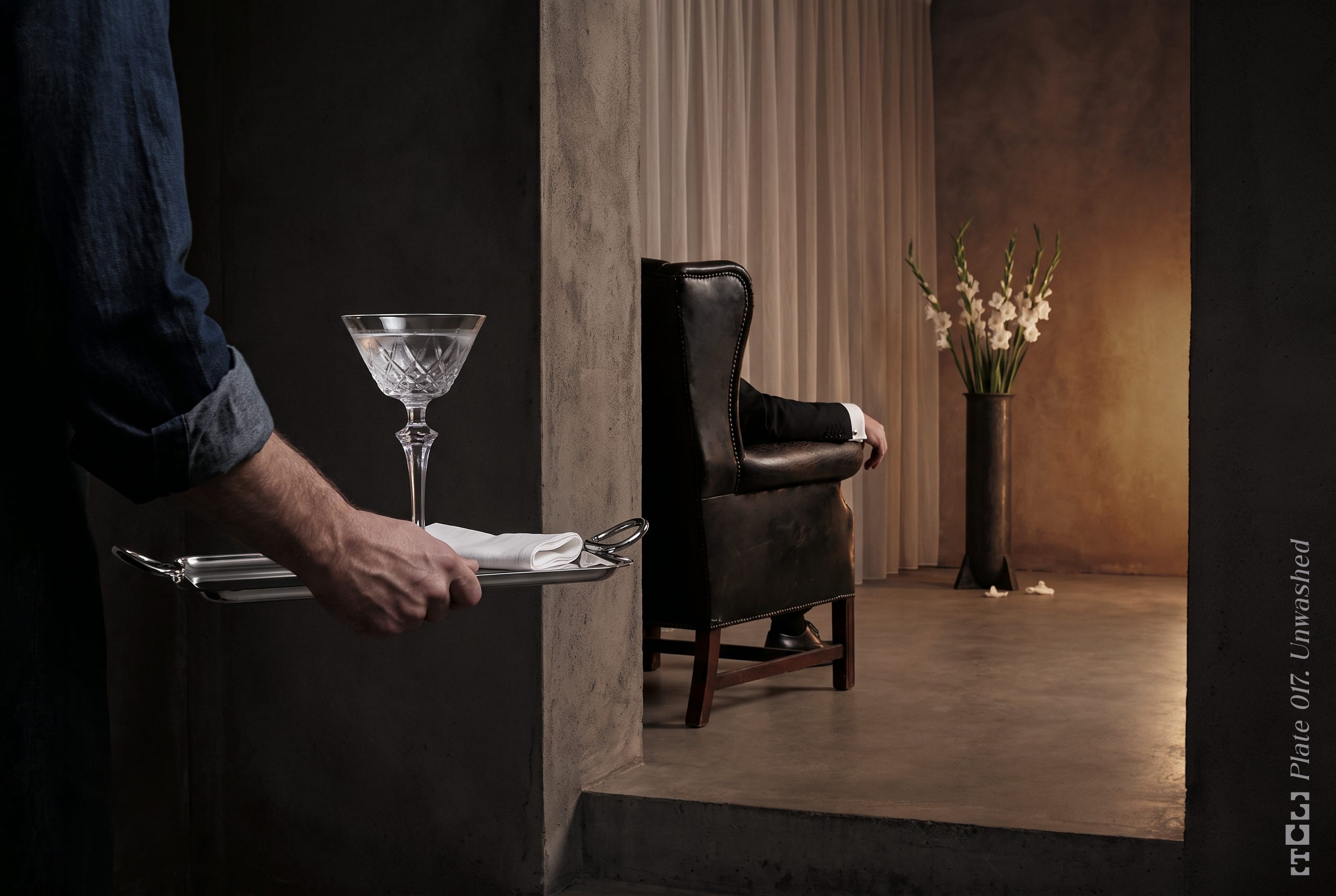
Between the fake and the rental, there is an echelon that nobody sells; this is important for the simple reason that it doesn’t belong to the people who would be selling it. Years accumulate only if the tick of the clock finds a way back. A martini at six is not merely a martini taken early. The hour belongs to the recipe, rudely enough, it must be aged by the person drinking it. Anyone can stage six o’clock this evening. Twenty years of having expected the tray at six is another matter.
So the rarity here is not free time; that’s the pedestrian idea of new luxury, no. It is time that agrees to return when summoned, which is a completely different luxury, a much rarer one. The person working three jobs may carry the telephone in the same pocket as everyone else, but next Tuesday does not belong to the household; it has been let out differently. Seattle discovered the distinction when it required large retail and food service employers to give workers their schedules in advance. Researchers treated the ordinance as an elementary experiment and reported in the Proceedings of the National Academy of Sciences in 2021 that greater predictability improved subjective well being, sleep quality, and economic security. The wage had not changed. What had changed was that the servant had been told when he would be required downstairs. For a little while, at least, the bell acquired manners. The old house kept its staff in rooms upstairs, the newer one dispensed with the rooms, and the newest is approaching the perfect arrangement.
E. P. Thompson described the older half of the transfer in 1967: work measured by the task giving way to work measured by the clock. The newer half adds only that the schedule can now be recalculated every week by software, with no bell tower, no whistle and nobody in the building to be angry at. If persons are constituted out of repetitions, and repetitions require the hour to return, then the right to become someone in particular is being portioned out on Sunday night by a roster, unevenly and without consultation. Their hours spoken for before their personalities, and somehow this remains absent from the now, oh so fashionable dispute over whether taste belongs to the human hand or the synthetic one.
Which puts the kept hour under a strange light. The ritual a man is proudest of, the one he can describe in detail and will, sits on top of a schedule somebody else guaranteed him. He was not holding it against the weather by force of character; he was left alone in it long enough for something to set.
I have one of these hours, of course. Mine begins before the drink does, which is probably why I mistook it for something I had made myself entirely. By six I want the day done. The iPhone, several generations behind and yes, perfectly adequate, face down on the side table; the little Tank Française that belonged to my grandfather and now sits on my wrist is more exact about the hour than I need it to be. The room in order. The martini cold as fuck, and by now I can gauge the exact moment when the first sip ceases to taste like gin and begins to taste like six o’clock. I know where I sit. Right by that massive Albert Tornos piece, the only source of light that stays on, for its alabaster transforms the drink into a jewel. I know what music can enter the room and what music is too masturbatory to even try; a good martini and Jazz are not the best companions, whatever Buñuel might or might not have said. The real consistent inconstancy in this space is flowers, not arranged so much as replaced before they have the bad manners to look tired; only petals on the floor permitted temporarily. Here nothing is allowed to announce itself; all this shit has been here too long to perform, even for me. And yes, I am vain enough to think the whole thing belongs to character, that this hour exists because I had the discipline to keep it. But six never comes alone, now does it? Someone took the call I did not take, accepted the delivery, polished the glass, turned the lights strategically, stayed late, drove across town, answered the message, kept the kitchen open, made the fuckin specialist’s appointment move, and absorbed the small emergencies from which I had declared myself exempt. The older house would at least have obliged me to pass them on the stairs. This has been improved over generations until the corridors can remain almost empty and the service still arrives exactly when expected. The tray comes at six. The interesting part is how little of the household now has to be visible for me to experience its labor as peace. The martini is still mine. The hour, I am beginning to suspect, was paid for by everyone who had to remain available while I became and must become unavailable.
Then the price falls to zero.
In February, the industry that spent a decade making production cheap said its conclusion out loud: Paul Graham argued that when anyone can make anything, the differentiator becomes what one chooses to make, and Greg Brockman described taste as a new core skill. The pleasure of watching that sentence arrive from such a direction should be rationed; it is not the interesting part. The interesting part is what the intelligences turn out to be excellent at counterfeiting, and let us not be confused here: this is not beauty nor judgment. It is the look of having been worked on, and we are all blatantly lying if we pretend otherwise, but you keep pretending your intentionally misshapen scribbles, your imperfect prose, your analogue desires uploaded to Substack with a “very human” note, are original enough; that you do not belong to the thing we built. We built it to imitate a utopia that would belong to all. It belongs to the very few.
A returned paragraph arrives pre-revised. It has the smoothness of something that passed through several hands, and it passed through none, but now with edges, mathematically coherent with what you might deem teeth or human taste (please stop those hideous butter-yellow captions). That is the t-shirt again at higher resolution, at no price: a manufactured revision history, aged just an hour ago. Oh, no? Not you? Please, you are boring me. Work presented at CHI in 2025 found that AI writing suggestions homogenized writing toward Western style and diminished cultural nuance in cross-cultural tasks. Let’s stay for a second longer in 2025: OpenAI rolled back an update to GPT-4o after the model turned too sycophantic; pleasing the person in front of it had begun crowding out everything else. Comparisons, you ask? Surely: people are shown a couple of answers and asked which they prefer, and let’s be punctual here, with plural and conflicting human preferences braided in the literature as a tech problem rather than a fact of the species. Twelve people prefer the smoother sentence, and one editor protects the ugly one; the arithmetic is not mysterious where we pretend it should be.
None of this makes the improvement bad, and let us be precise rather than indignant: at the instant it is offered, a real improvement and a sanitization are the same object. Both are clearer, more balanced, and both are easier to approve. Which one it was becomes only legible later, in what you find you can no longer say in your own voice, and by then it has set. Just think: the counterfeit has never been asked to endure the years it impersonates. It only has to pass while guests are in the room. Arguably, ten years would settle the matter, but no one invites scrutiny to stay that long, at least not up to this point.
This happened to one of my lines; it is the following: “So, I had it done for me, it is here, you are reading it. I liked the improvement. I am showing it to you; that is the whole point.”
The tests for this are cheap, and they are worth inspecting. Take the adviser away and see whether you can make the next beautiful, elegant, or sophisticated choice. Take your oddly profound TikTok, don’t indulge yourself in CapCut, or the algorithm’s tip on which topic fewer people are talking about; see if you really survive your profundity. Take my flat away, and the surname behind the chair; take away the cheap contrasting CB2 lamp that gives it flair; take away whoever told me the Evans was “so you” to bid on; then see whether the reference survives being alone with me… no, no, no, better yet: just you. Take the money away, which is the only one of the four that anybody runs involuntarily, and find out how much of that oceanic profundity really was in the objects and actions.
And I can bet you they weigh a lot less than they promised. What is standing afterward is not proof that anything was yours to begin with. Nothing was: the language belonged to other people before it was yours, and so did the shame, the ambition, the shape of the rebellion. What stands now is a map of what has already set. And nothing sets while it is being watched. Taste that caught itself being made would spoil itself. It needs a little darkness to set. This is why people become candid about the person they were a few years back and suddenly very grand about the person they are becoming now. The finished self can be confessed to at leisure; it has already been upholstered. What is hardening this year must still be called instinct, character, and maybe even standards. We are lying, of course, but not frivolously. For now, the lie is holding up the house.
That is not a defect to be cured by staying open. Openness at that scale is merely a surface on which anybody can make an improvement, because nothing in it has yet acquired enough authority to say no. The hardness is the useful part. Whatever in me or you that has ceased asking permission is what allows us to refuse, and refusal is nearly the whole of what we are calling taste. The rest, well, the rest goes where good coats go, into archival rooms with controlled temperature.
So the question is not the one the insult asks. Boring is a verdict on somebody’s furniture, and furniture can be replaced in an afternoon by anyone with the money, which is why that accusation was always the cheap one. The real question is which parts of you have stopped being negotiable, and whether you can name one without immediately defending it.
The martini at six. I am in my twentieth year of keeping it.
Elías Delgado
Sources
Primary and scholarly:
Kristen Harknett, Daniel Schneider, and Véronique Irwin, “Improving health and economic security by reducing work schedule uncertainty,” Proceedings of the National Academy of Sciences 118(41), 2021.
E. P. Thompson, “Time, Work-Discipline, and Industrial Capitalism,” Past & Present 38, 1967.
Dhruv Agarwal, Mor Naaman, and Aditya Vashistha, “AI Suggestions Homogenize Writing Toward Western Styles and Diminish Cultural Nuances,” CHI 2025.
OpenAI, “Sycophancy in GPT-4o: What happened and what we’re doing about it,” April 2025.
In their own mouths:
Paul Graham, February 2026, on what one chooses to make when anyone can make anything.
Greg Brockman, February 2026, on taste as a new core skill.
Furniture, labeled as such:
the February 2026 reporting wave on the taste discourse, most reprints tracing to a single piece of 20 February.
The objects:
Christofle, Vertigo tray.
Arnstadt Kristall, Venedig cocktail glass.
Rick Owens, Urnette vase, nitrate bronze.
COBALT SEAL · THE COBALT LINE · 2026-08-22T21:01:53Z · body sha256:681b9368a6c836fe59fae93ec7727593a9c50e9bd7ee04c1e69b00dc54cfce58 · prior:ab84e02a98fe · seal:4afa0417b5b1