

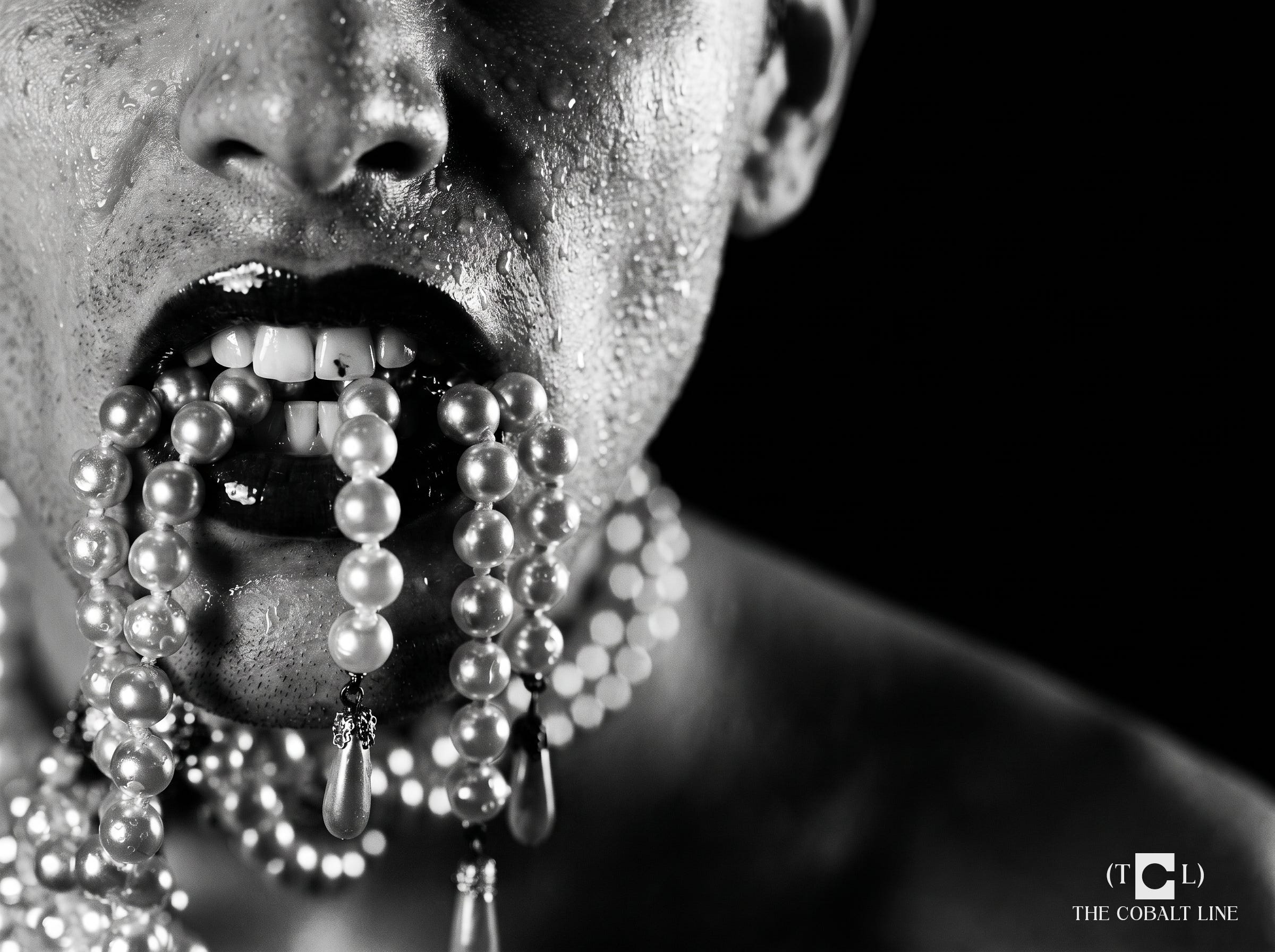
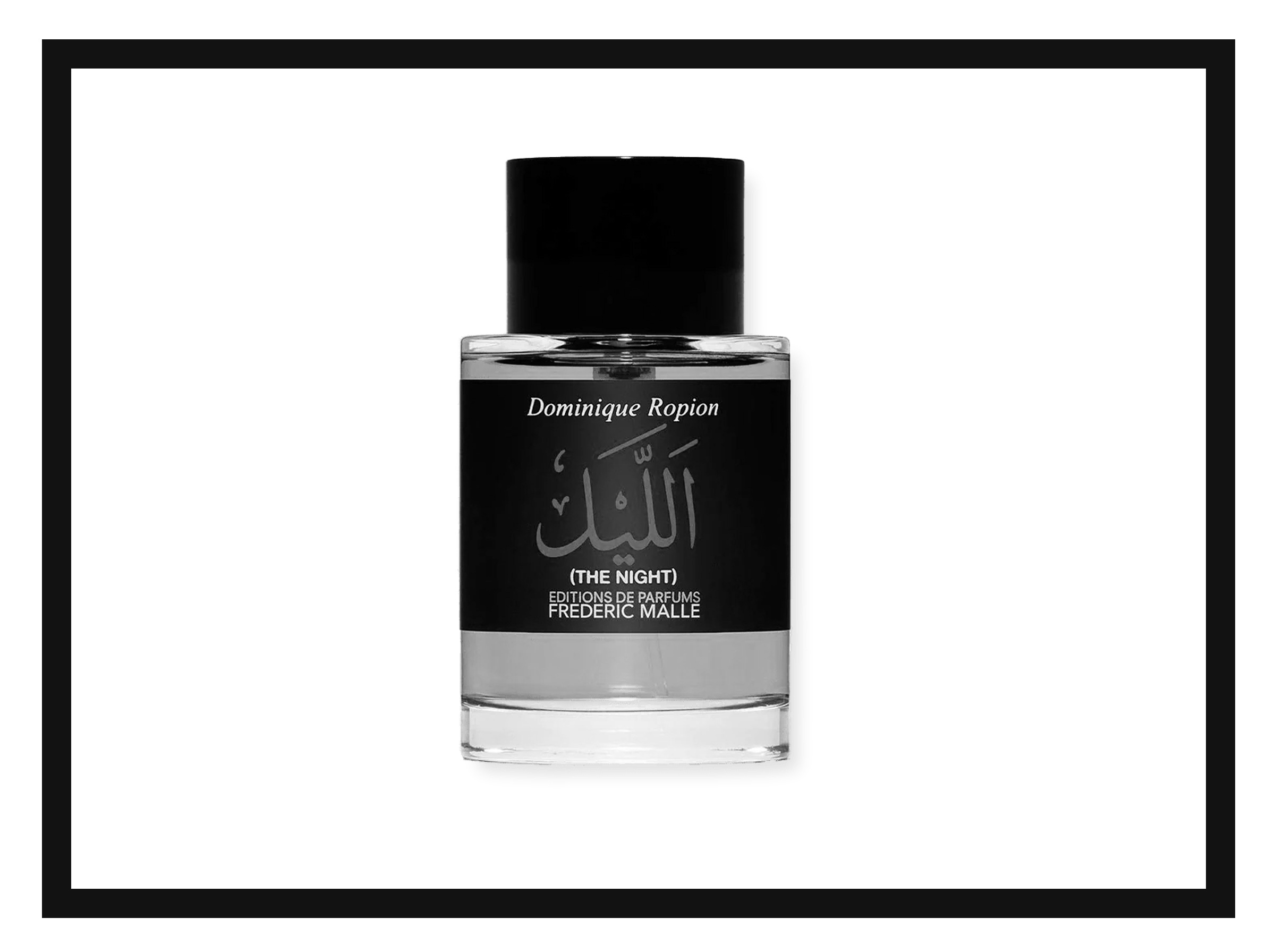
On the left wrist, I am wearing The Night. Dominique Ropion composed it for Frédéric Malle around a quantity of natural oud the house calls unprecedented, and it behaves the way that word suggests. It enters a room before I do and leaves some time after. By the third hour, the oud is sour at its animalic edge, warm hide beneath a dense rose that has lost its fresh, wet surface. The launch copy explained that its retail price was proportionate to its cost. I admire the indecency of that sentence. Here is a luxury house telling me that something expensive went into the expensive thing, and I find the explanation almost touching.
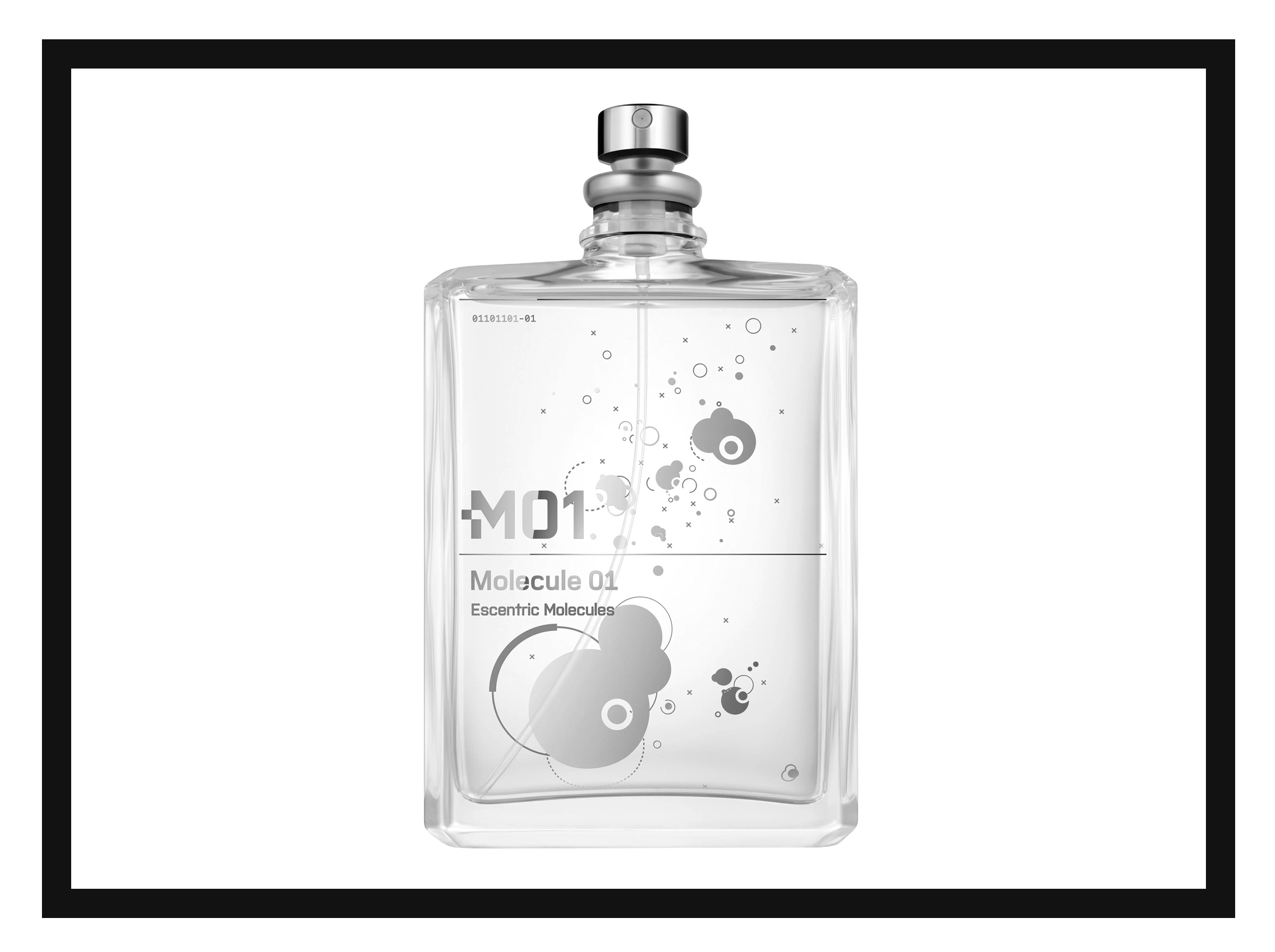
On the right wrist, Molecule 01. Geza Schoen built it around a single aroma chemical, Iso E Super, which he describes as “less an aroma than an effect which lends an indefinable radiance to the wearer.” The house’s FAQ discusses its apparent disappearance and return, and the people who struggle to smell it. When I turn my head, I catch a dry cedar smell, almost the dust left by sharpening a pencil, warmed by the skin and gone when I turn back. I like the suggestion that a perfume might become difficult to distinguish from the person wearing it. Someone comes closer and finds something lovely there, apparently belonging to the skin. The left wrist seems willing to admit an expense that the right would rather let pass for a personal quality. I love the elaboration on the left. On the right, I like the chance that its effects will be mistaken for me. Neither perfumer has instructed me to make this distinction. I have brought it to their work, along with the rest of my education.
In “The Book of the Courtier,” published in 1528, Baldassare Castiglione gave that education a word: sprezzatura. The courtier was to conceal his art, making what he did and said appear to come without effort and almost without thought. His accomplishments required training; their presentation was to suppress its strain. Castiglione also understood the embarrassment of visibly labouring at nonchalance. A man so intent on appearing careless that his clothes fell off him had merely found another way to be affected. Castiglione adds that an easy gesture persuades the onlooker that the performer knows much more than he has shown. The accomplishment before us begins to stand for an unexamined reserve, and admiration extends credit to a person whose limits we have not encountered.
The dancer’s landing seems weightless, although we know what a body weighs and that someone has taught it to land. Knowledge of the training can deepen the pleasure. I begin to object when the appearance of ease becomes a condition of admission, and someone’s visible exertion is enough to discredit an otherwise accomplished result. The dancer has to count somewhere. Why should noticing the count make us think less of him?
An accomplished result does not become worse because the person producing it wanted badly to succeed. Yet “trying too hard” allows the wish for admission to count against the applicant, even when he has done what admission requires. The insult claims to judge what he brought into the room. It is judging how badly he wanted to be in it. I object to that substitution, and to the freedom it gives the room to enjoy someone’s work while finding his need to work embarrassing.
For the 2014 paper “The Red Sneakers Effect,” Silvia Bellezza, Francesca Gino and Anat Keinan asked fifty-two female luxury-shop assistants and fifty-seven women recruited at Milan’s central station to assess descriptions of a woman entering a luxury boutique. The assistants gave the woman in gym clothes and a jacket greater potential as a customer than the woman in a dress and fur coat. The station respondents reversed the ranking, expecting less purchasing power from the gym clothes. The experiment stops short of the job applicant, who has to decide whether the person across the desk will grant him the same interpretation. I picture him putting on a tie for an interview with a man who has made a point of wearing none. Each has dressed for the encounter. Only one can afford to suggest that the encounter has made no demands on him. Nobody calls the other man underdressed.
The nose has its own education in this distinction. In “The Road to Wigan Pier,” published in 1937, George Orwell recalled the lesson of his upbringing: “the lower classes smell.” Even servants known to be clean remained physically suspect. The disgust preceded the encounter, attaching an imagined smell to a class of bodies. Elsewhere in the same discussion he connected washing to access to a bathroom. The facilities were unequally available; the resulting judgement presented itself as an immediate response to the person.
Effort has no smell, provided someone has had the means to remove it. A change of shirt after work takes another shirt and somewhere to change. The clean body arrives without displaying those arrangements. I want the bath, the excellent soap, the pleasure of coming close to someone who has used them. That pleasure is no evidence that the person whose day remains detectable has failed to care. A sour collar tells me that a shirt has been worn. It gives me no authority over the life inside it.
I care about fit and material, about how a garment is put together and what it does once a body enters it. A neatly finished seam gives me something to examine. Its neatness tells me very little about how long the person sewing it worked that day, or what they were paid. I bring that distinction reluctantly to quiet luxury, because the things it asks me to admire are so often the things I admire already. In July 2025, a Milan court placed Loro Piana under judicial administration over failures to supervise a production chain involving exploitative workshops. Reuters reported workers sleeping at a workshop and working up to ninety hours a week. The house said a supplier had subcontracted without its knowledge; Loro Piana itself was not under criminal investigation. Oversight ended early in April 2026. The company reported 2,400 audits since 2024 and the termination of relationships with more than a hundred suppliers and sub-suppliers.
The surface of a jacket cannot settle that history. An exposed stitch would not have disclosed it either. So I can’t simply ask the clothes to show their work. I enjoy reading construction and sometimes allow that competence to reassure me about matters it cannot reach. The garment has been made well; I am pleased with myself for noticing; the pleasure supplies an unwarranted sense that I have attended to its making. There are questions I have never asked of a seam.
The Night invites the same mistake. The house has told me an expensive material was used generously, which explains the composition and the terms of its sale while saying nothing of how the money travels back through its production.
Molecule 01 has made its material unusually public. The name of its single odorant is part of its appeal. My fantasy of an artifice concealed inside the skin depends on a perfume that advertises how it is made. I know the name, know who chose it, and still enjoy the thought of radiating by nature. Schoen’s accomplishment survives being identified. My right wrist has drawn my attention back to it while I write, and knowing what is there has given me another reason to return. I won’t treat that pleasure as a symptom. An intimate effect remains available to someone who understands the composition, just as apparent ease remains beautiful to someone who knows the preparation. It turns ugly when I make the pleasure a judgement about the worth of people who cannot produce it, or whose preparation is easier to see. The demand to make care disappear starts elsewhere, in what I permit another person to show.
The phone gives that demand ample exercise. A blurred photograph beside a screenshot, a plate of food, some irrelevant sky: the sequence suggests a life interrupted briefly by the taking of pictures. A creator can spend an afternoon selecting those interruptions while negotiating the bind described by media scholars Brooke Erin Duffy and Emily Hund in interviews with twenty-five Instagrammers: too real or not real enough. There are still people at the other end of the feed. A ranking system helps determine which people receive the image, and the person making it works with that uncertainty. The photograph must look worth attending to without appearing to have needed attention quite so badly. Even deliberate awkwardness becomes another available technique. Castiglione’s man with the falling clothes would recognise the difficulty. Knowing how the effect was obtained does surprisingly little to stop it working on me.
My father used to say:
“Puedes ser un poco patán, pero jamás perder la clase.”
“You can be a bit of a prick, but never lose class.”
I still like the permission in the first half, and I have carried the second into rooms without asking it many questions. Composure sounds like something a person possesses. It is also something other people insist upon, especially when they would prefer a difficult encounter to remain pleasant for them. The advice becomes less comfortable when I hear it from the other side of the bar. Consider a barman at a private club, keeping his composure through a long service. There is a pleasure in competence that an account of exploitation does not exhaust, and there is dignity in deciding how much of one’s difficulty to make available to strangers. He owes those strangers no intimate report of his fatigue.
And he may be attached to that composure. He has made a skill his own under conditions he did not choose. Telling him that its dignity is merely a convenience for the guests would deprive him of an achievement while leaving their power intact. I can display my preparation and call it an artistic position. He has to finish the shift, and my willingness to look as though I have tried makes his position no easier. Sprezzatura is a luxury only the poor can afford.
At the club, a barman leaned across my martini to ask whether I wanted water, and his breath brought a sour coffee smell to the rim of the glass. They used to hire better people here. The thought arrived in the voice I use for a badly finished seam. I moved the glass a little farther along the bar, so he would have to reach next time, and my left wrist went with it. Then I heard what I had thought: better people. I knew nothing about him beyond the drink he had made and the breath I disliked. He was still waiting for an answer about the water.
I also know the attraction of being spared another person’s account of preparation. A host who says dinner was nothing allows the evening to proceed without requiring the guests to admire six hours in the kitchen. But accept the gift often enough and its absence starts to feel like an insult.
Writing gives the same preference somewhere respectable to hide. A sentence improved through revision may become easier to read, and I want that ease for the reader. I also want the reader to find me good at sentences. Somewhere in that ordinary ambition sits the wish that being good should look like a condition I arrived in, requiring very little maintenance. The revisions remain available to me as something I can disclose when disclosure will improve the reader’s opinion of the finished work. I tend to choose a moment that flatters me.
Both wrists are still scented as I finish. The left remains insistent; the right has vanished again, and I will go looking for it.
Elías Delgado
Sources:
COBALT SEAL · THE COBALT LINE · 2026-10-20T16:46:02Z · body sha256:23dae3a487a97ba61942730a074948e000e23df99ecaabb2c06b1f3683f45b8a · prior:4aac65bdd5ff · seal:85bad5689e84