


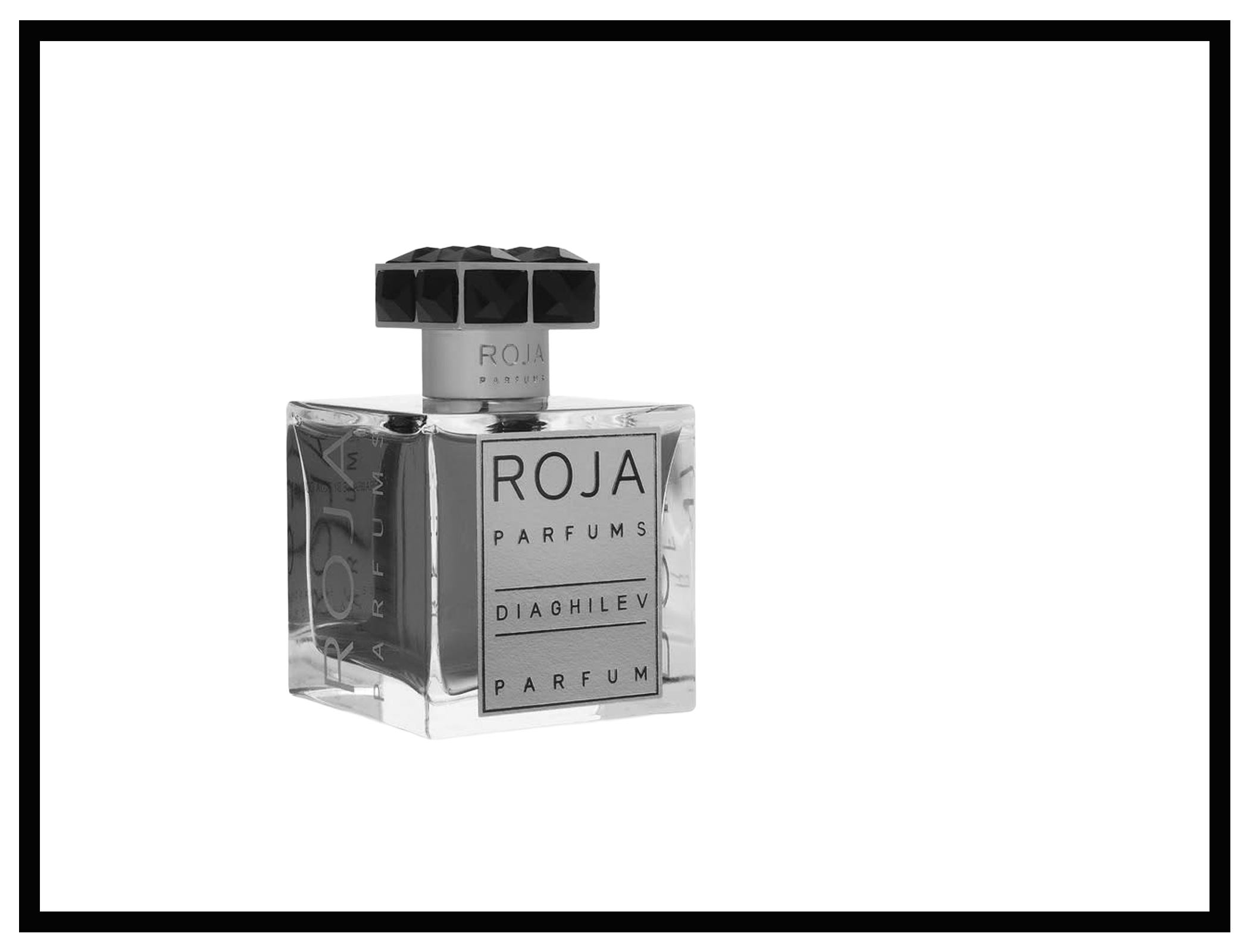
The cumin arrives while Diaghilev is still bright with bergamot, tangy lemon, and the sweeter impression of mandarin. It is a small presence within the citrus, enough to suggest a body beneath the soap. There is a freshly shaved neck in this perfume. As the flowers develop, I begin to associate the fragrance with a man whose appearance has received considerable attention. The shaving has not hidden the neck; it has introduced it.
Jasmine, Rose de Mai, heliotrope, violet, ylang-ylang. The heart makes room for an entire bouquet, with cumin continuing underneath. I picture living flowers around this man too, their extravagance outlasting any occasion on which someone might admire them. Later, oakmoss, vetiver, and patchouli give the scent its earthy density, and the animalic base surfaces. Roja’s notes include civet, musk, ambergris, ambrette, leather. The soap remains in my portrait of him. So does the body.
That base deserves its origins. Natural civet is traditionally collected from the animal’s perineal glands, and in Ethiopia it still is; ambergris forms in the intestines of sperm whales and is found at sea and on shore. Synthetic equivalents carry these effects into modern bottles, but the vocabulary keeps its ancestry. Civet remains an extraordinary thing to put beside roses.
Suetonius records that when Titus objected to his father’s tax on urine, Vespasian held money from the first payment to his son’s nose and asked whether its odour offended him. It did not. The money gave no sensory account of its source. Perfumery has another use for an embarrassing origin: it dilutes, combines, and transforms until something bodily becomes worth approaching. Diaghilev’s gentleman retains an animalic suggestion through all his shaving and flowers. I find the retention attractive.
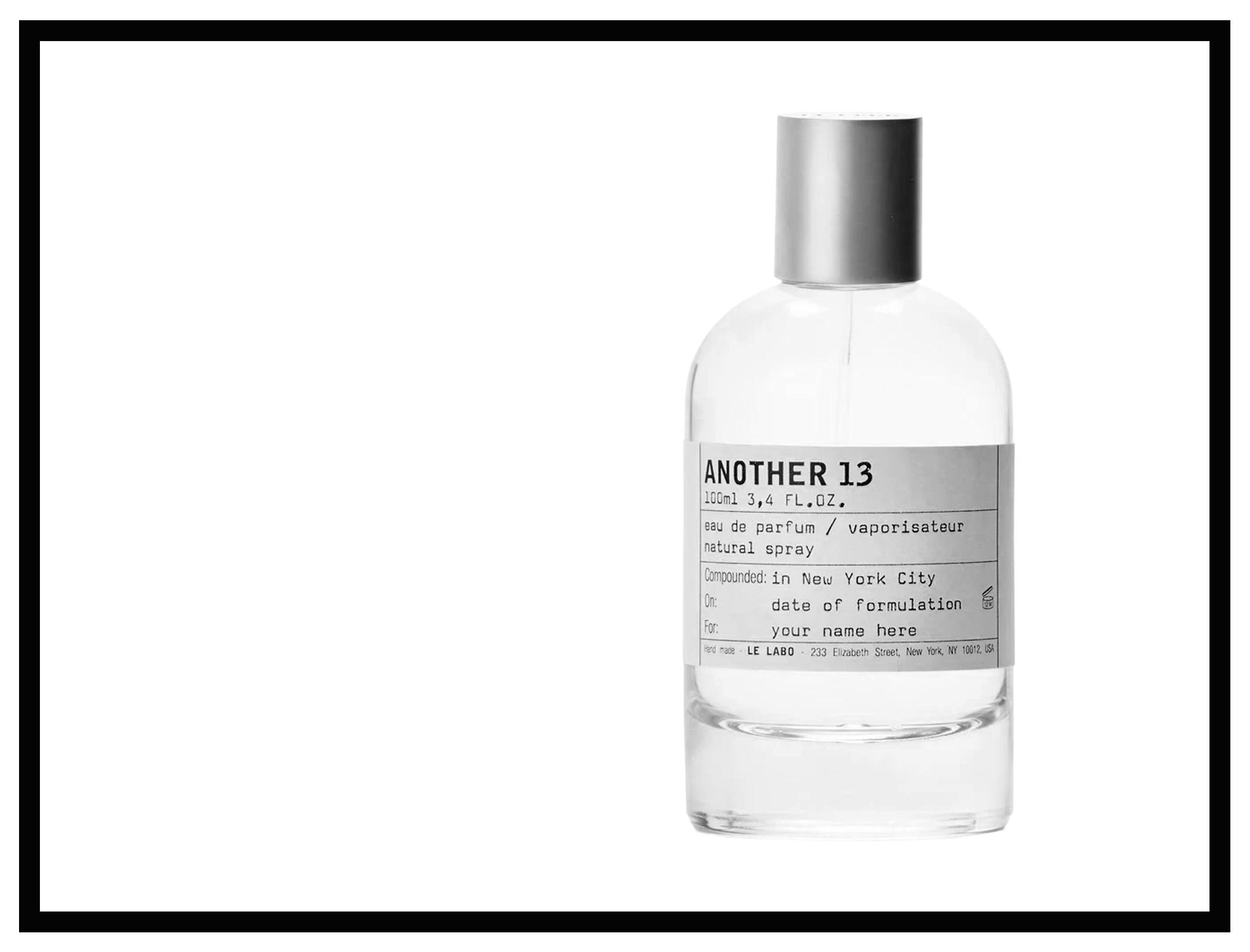
I layered Diaghilev with Le Labo’s Another 13 because of the cumin. Another 13 has a clean, abstract association with skin for me, and a dry mineral and amber-wood character. A delicate green pear impression met the citrus. The moss and patchouli gained air, retaining their earthiness while feeling less damp and enclosing. Details that had pressed together became easier to attend to. I had added another perfume and felt more space.
That space mattered erotically. The animalic character remained perceptible within the elaborate flowers and grooming, while Another 13’s suggestion of skin brought it closer. A more expensive erection, with the bouquet intact. The cleanliness belonged to the excitement as closely as the cumin did; separating the body from its presentation would have meant taking apart the thing that excited me.
Le Labo itself describes Another 13 in animalic terms, identifying ambroxyde, jasmine, and moss. Its intimate, clean effect on me was already a composition. The skin I perceived had passed through someone else’s judgment before reaching mine, and I had carried it into another perfume. Even the impression of getting closer to a body had been arranged.
Before the intervention, Diaghilev had already given me a portrait. The fragrance supplied the soap, flowers, and animalic suggestion; its name supplied a historical person. Between sensation and information, a man acquired surroundings and a way of living, specific enough to make me want to interfere with his presentation.
For the Ballets Russes, Sergei Diaghilev’s medium was the company. He brought Stravinsky, Bakst, Fokine, and Nijinsky into productions whose form bore his judgment; his signature was the arrangement of work made by others. The V&A records his relationship with Nijinsky and the dancer’s dismissal after marrying in 1913. The performer whose body helped make the achievement possible was also subject to Diaghilev’s professional authority, and desire entered the terms of that authority. A namesake’s biography cannot account for what a fragrance does on my skin. It does leave one question hard to put down: what an arranger owns.
Roja Dove first created the perfume for the V&A’s 2010 exhibition, later redeveloping it as a parfum. He places it within the chypre tradition, particularly beside Mitsouko and Rochas Femme, and describes its scale as “baroque in the extreme.” The gentleman I perceived descends from two perfumes made for women. His composure does not mention it.
The perfume’s refinement reaches the nose before the wearer’s character reaches judgment. Its beauty invites proximity without promising anything about what proximity will bring. A shaved neck surrounded by flowers is enough to interest me; it tells me very little about the person’s generosity.
Take the stranger in a lift who gets the money right and the decade wrong. He recognizes something costly in the density, then places it beside an old bottle on his mother’s dressing table. The elaborate gentleman I perceive has become somebody’s mother. Mitsouko and Femme give his mother a place in the inheritance I had pictured around a man. Whatever I spent, I have bought no authority over his memory.
The perfumer’s accomplishment travels as part of the wearer’s presence, its authorship largely concealed. Money has made another person’s cultivated judgment portable. The stranger shows how precarious its social return remains: the work is perceptible, its intended distinction unsettled. Vespasian’s coin required no agreement about the latrine before it could be spent. A fragrance claiming distinction has to meet another nose.
What becomes mine when I wear it? The bottle is the easy part. I have chosen to make this composition part of how I am encountered, and in layering it with Another 13 I made a further decision, directed by the cumin and by a fragrance I knew well enough to bring into contact with it. Wearing disclosed the result. An educated nose has room for dislike, including dislike informed by exact attention; mine found pleasure, and the body entered the verdict. The intervention changes what happens to the purchased work in use; it does not launder the purchase.
Roja finished Diaghilev. I put Another 13 over it. I have arranged a wearing of their work. The compositions remain Roja’s and Le Labo’s; the relationship between them is mine. Perfumes bring material constraints into the experiment. The people Diaghilev directed brought intentions, careers, and lives over which his arrangement exercised power.
The stranger’s mother remains in the lift beside my gentleman. Both portraits answer to the same fragrance; neither cancels the other. But once the doors close, he receives the fragrance without having chosen my proximity. Enjoying it and finding it oppressive take place in the same shared air. Getting out at the next floor has a cost for the man whose appointment is upstairs; objecting has another when the wearer has authority over that appointment. Choosing the fragrance gives me responsibility for consequences I have not chosen. The pleasure remains, which is where the difficulty begins.
The man in Diaghilev remains compelling to me. His soap and flowers have become inseparable from the bodily suggestion underneath, and Another 13 has given their company more air. Someone encountering the combination encounters a decision they have no reason to identify as mine. Roja’s composition, Le Labo’s suggestion of skin, and my intervention arrive together. The shaved neck gives no account of that division of labour. The body appears to possess what the arrangement has made perceptible, and I have gone to some trouble to make the appearance worth approaching.
Elías Delgado
Sources:
COBALT SEAL · THE COBALT LINE · 2026-10-13T16:37:16Z · body sha256:fa33d4a16622b449148533d83358cdc6e39e49eef6690f1ad8131bc3c3d15c53 · prior:d7629b21f74e · seal:4aac65bdd5ff